







How to Connect to Live JSON Services from Google ADK Agents (via CData Connect AI)

Google ADK (Agent Development Kit) is a powerful, model-agnostic framework for building AI agents that can interact with various data sources and services. When combined with CData Connect AI Remote MCP, you can leverage Google ADK to build intelligent agents that interact with your JSON services in real-time through natural language queries. This article outlines the process of connecting to JSON using Connect AI Remote MCP and configuring a Google ADK agent to interact with your JSON services through ADK Web.
CData Connect AI offers a dedicated cloud-to-cloud interface for connecting to JSON services. The CData Connect AI Remote MCP Server enables secure communication between Google ADK agents and JSON. This allows your agents to read from and take actions on your JSON services, all without the need for data replication to a natively supported database. With its inherent optimized data processing capabilities, CData Connect AI efficiently channels all supported SQL operations, including filters and JOINs, directly to JSON. This leverages server-side processing to swiftly deliver the requested JSON services.
In this article, we show how to configure a Google ADK agent to conversationally explore (or Vibe Query) your data using natural language. With Connect AI you can build agents with access to live JSON services, plus hundreds of other sources.
Step 1: Configure JSON Connectivity for Google ADK
Connectivity to JSON from Google ADK agents is made possible through CData Connect AI Remote MCP. To interact with JSON services from your ADK agent, we start by creating and configuring a JSON connection in CData Connect AI.
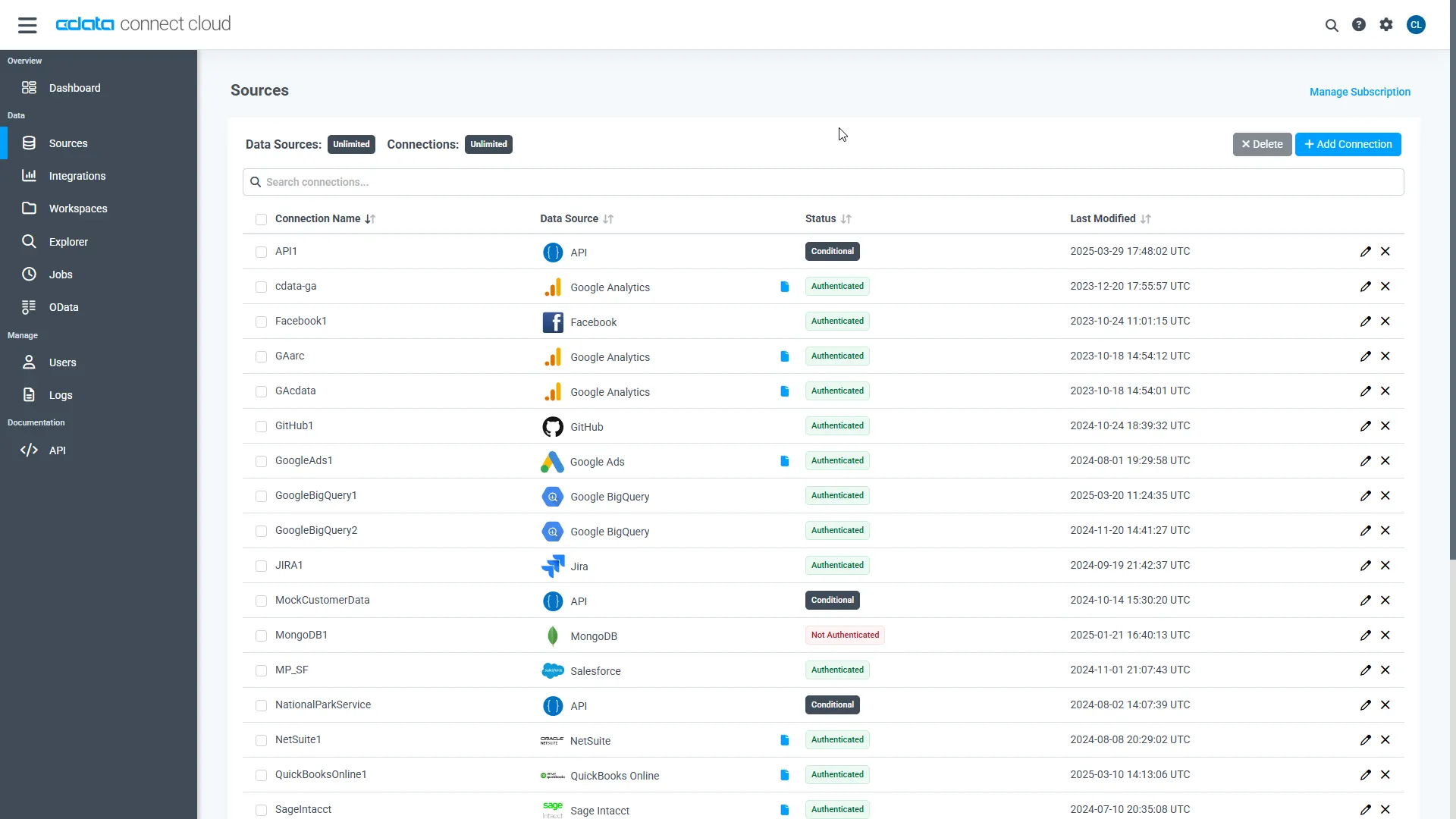
- Log into Connect AI, click Sources, and then click Add Connection
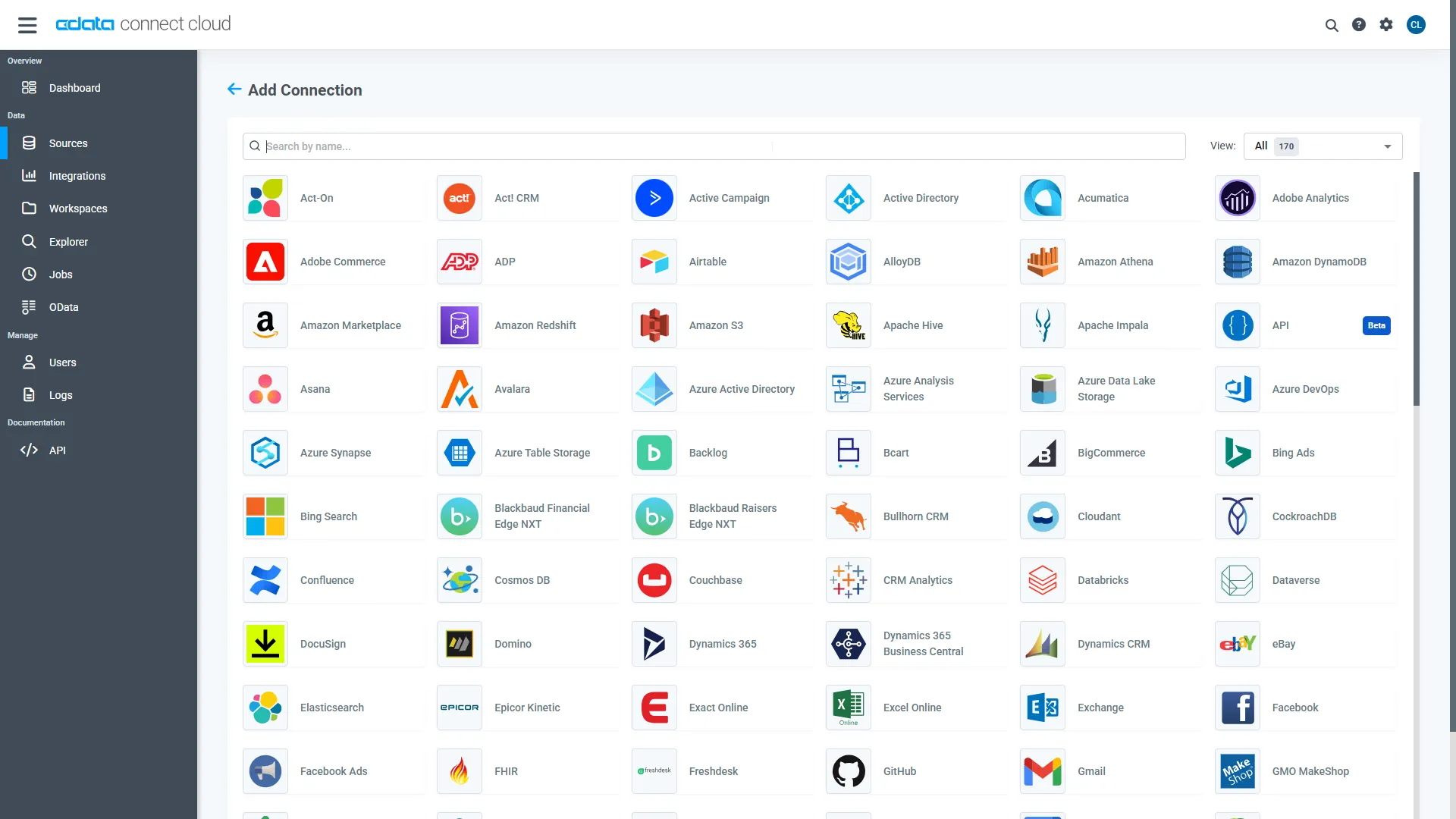
- Select "JSON" from the Add Connection panel
-
Enter the necessary authentication properties to connect to JSON.
See the Getting Started chapter in the data provider documentation to authenticate to your data source: The data provider models JSON APIs as bidirectional database tables and JSON files as read-only views (local files, files stored on popular cloud services, and FTP servers). The major authentication schemes are supported, including HTTP Basic, Digest, NTLM, OAuth, and FTP. See the Getting Started chapter in the data provider documentation for authentication guides.
After setting the URI and providing any authentication values, set DataModel to more closely match the data representation to the structure of your data.
The DataModel property is the controlling property over how your data is represented into tables and toggles the following basic configurations.
- Document (default): Model a top-level, document view of your JSON data. The data provider returns nested elements as aggregates of data.
- FlattenedDocuments: Implicitly join nested documents and their parents into a single table.
- Relational: Return individual, related tables from hierarchical data. The tables contain a primary key and a foreign key that links to the parent document.
See the Modeling JSON Data chapter for more information on configuring the relational representation. You will also find the sample data used in the following examples. The data includes entries for people, the cars they own, and various maintenance services performed on those cars.
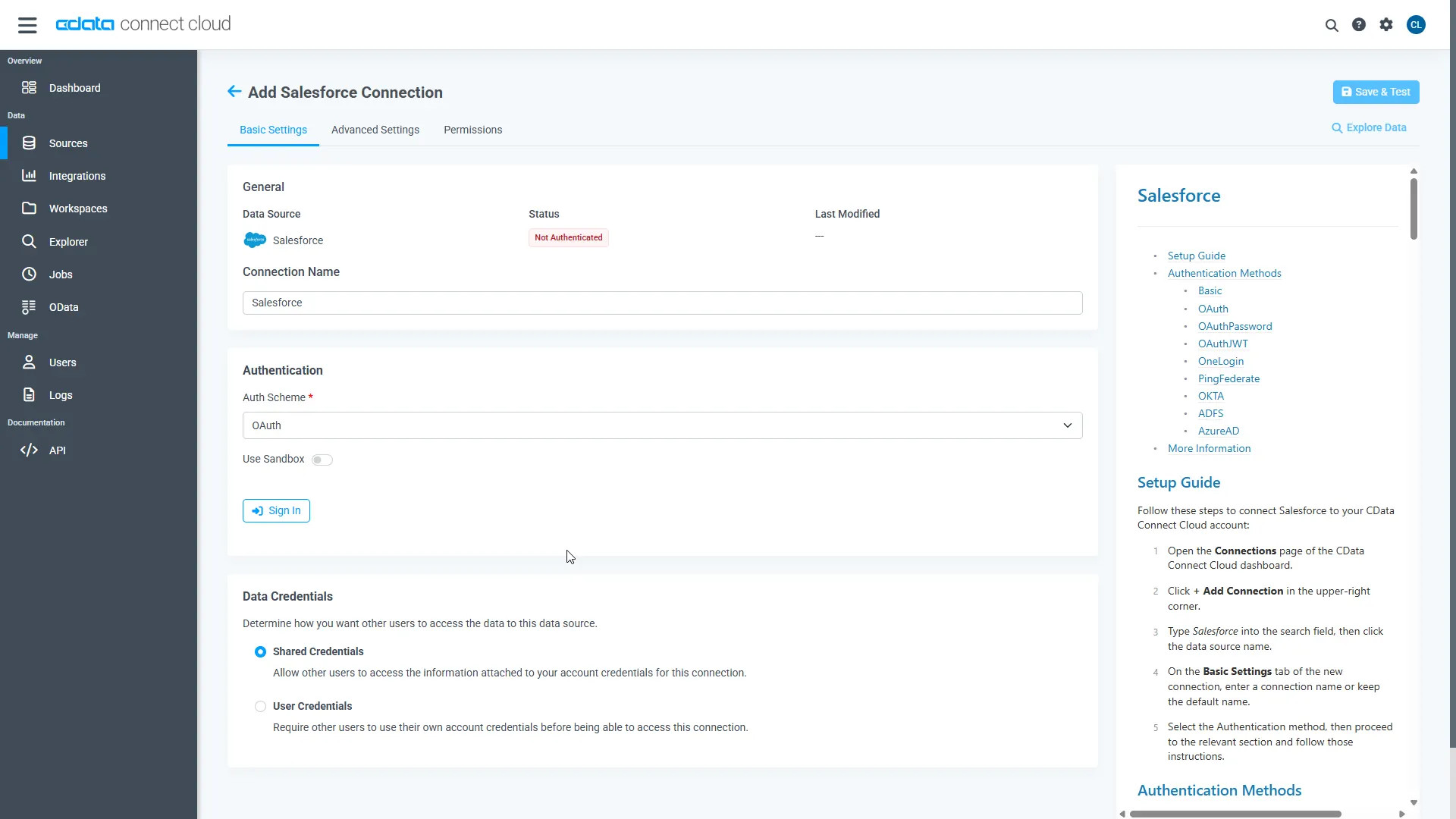
- Click Save & Test
-
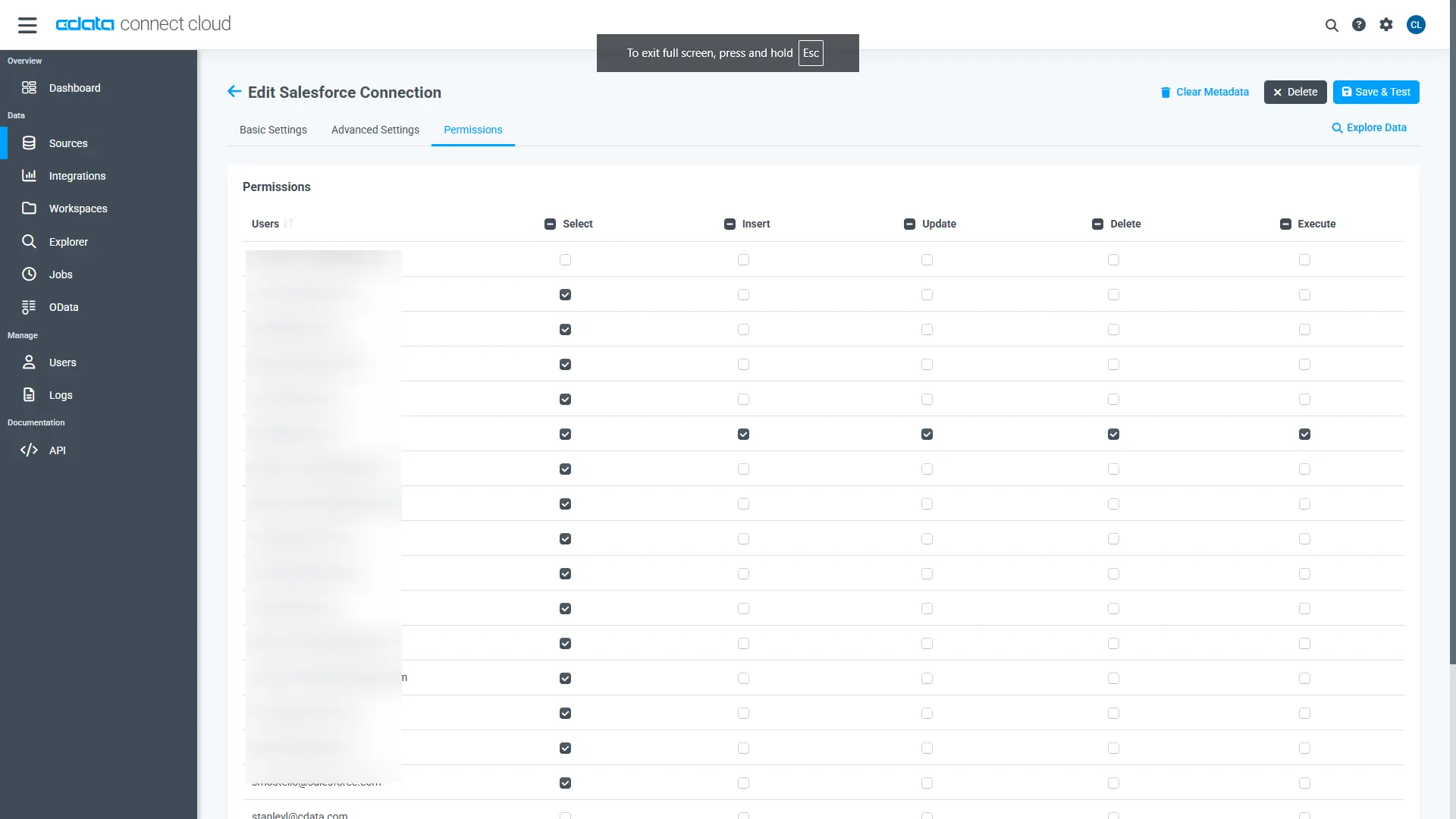
Navigate to the Permissions tab in the Add JSON Connection page and update the User-based permissions.
Add a Personal Access Token
A Personal Access Token (PAT) is used to authenticate the connection to Connect AI from your Google ADK agent. It is best practice to create a separate PAT for each service to maintain granularity of access.
- Click on the Gear icon () at the top right of the Connect AI app to open the settings page.
- On the Settings page, go to the Access Tokens section and click Create PAT.
-
Give the PAT a name and click Create.
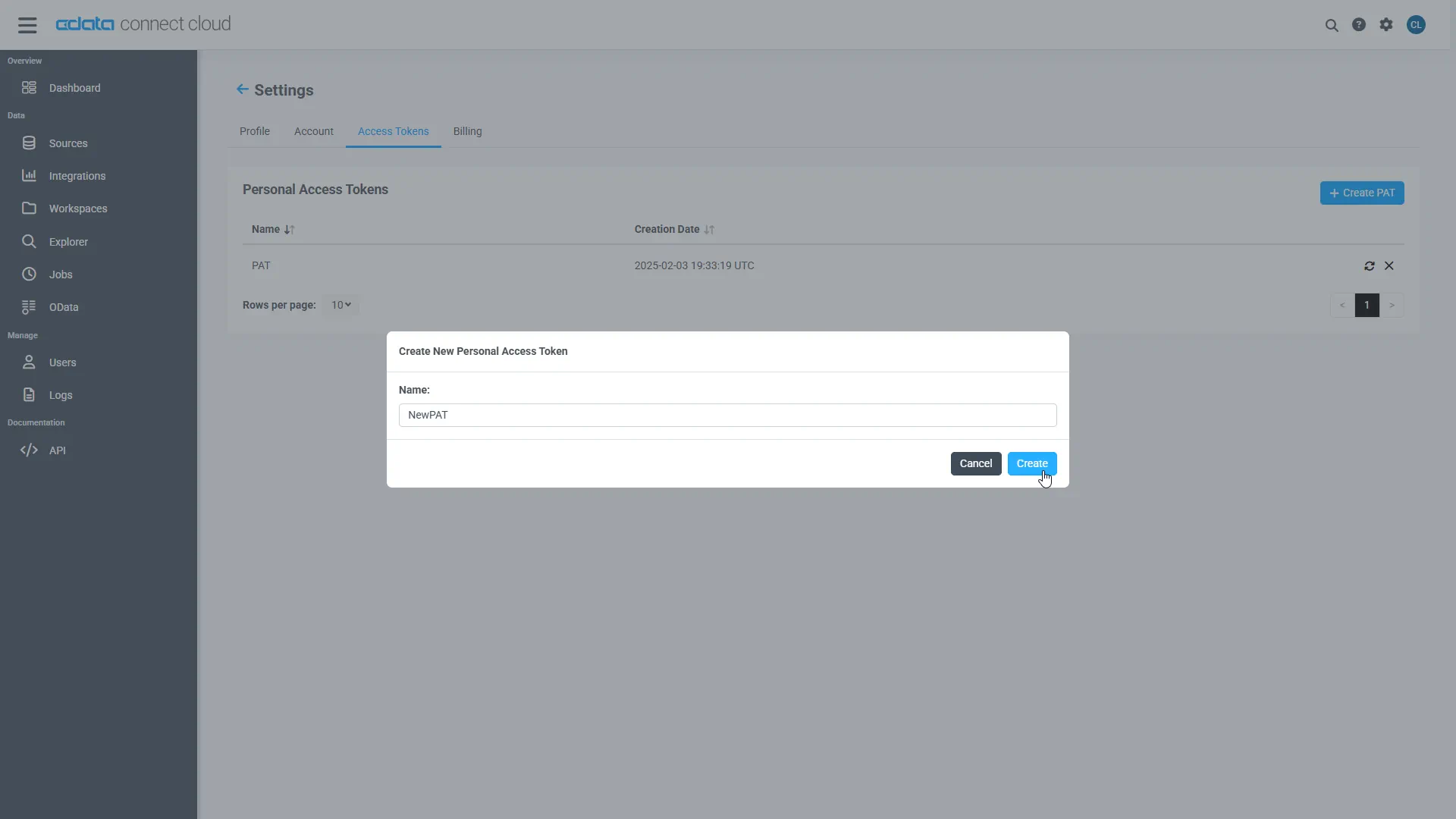
- The personal access token is only visible at creation, so be sure to copy it and store it securely for future use.
With the connection configured and a PAT generated, we are ready to connect to JSON services from your Google ADK agent.
Step 2: Configure Your Google ADK Agent for CData Connect AI
Follow these steps to configure your Google ADK agent to connect to CData Connect AI. You can use our pre-built agent as a starting point, available at https://github.com/CDataSoftware/adk-mcp-client, or follow the instructions below to create your own.
-
Ensure you have the Google ADK Python SDK installed. If not, install it using pip:
pip install google-genkit google-adk
- Create or update your agent's configuration file (typically agent.py) to include the CData Connect AI MCP connection. You'll need to configure the MCP toolset with your Connect AI credentials.
-
Set up your environment variables or configuration for the MCP server connection. Create a .env file in your project root with the following variables:
MCP_SERVER_URL=https://mcp.cloud.cdata.com/mcp
MCP_USERNAME=YOUR_EMAIL
MCP_PASSWORD=YOUR_PAT
Replace YOUR_EMAIL with your Connect AI email address and YOUR_PAT with the Personal Access Token created in Step 1. -
Configure your agent.py file to use the CData Connect AI MCP Server. Here's an example configuration:
import os import base64 from google.adk.agents import LlmAgent from google.adk.tools.mcp_tool.mcp_toolset import MCPToolset from google.adk.tools.mcp_tool.mcp_session_manager import StreamableHTTPConnectionParams from dotenv import load_dotenv # Load environment variables load_dotenv() # Get configuration from environment MCP_SERVER_URL = os.getenv('MCP_SERVER_URL', 'https://mcp.cloud.cdata.com/mcp') MCP_USERNAME = os.getenv('MCP_USERNAME', '') MCP_PASSWORD = os.getenv('MCP_PASSWORD', '') # Create auth header for MCP server auth_header = {} if MCP_USERNAME and MCP_PASSWORD: credentials = f"{MCP_USERNAME}:{MCP_PASSWORD}" auth_header = {"Authorization": f"Basic {base64.b64encode(credentials.encode()).decode()}"} # Define your agent with CData MCP tools root_agent = LlmAgent( model='gemini-2.0-flash-exp', # You can use any supported model name='data_query_assistant', instruction="""You are a data query assistant with access to JSON data through CData Connect AI. You can help users explore and query their JSON services in real-time. Use the available MCP tools to: - List available databases and schemas - Explore table structures - Execute SQL queries - Provide insights about the data Always explain what you're doing and format results clearly.""", tools=[ MCPToolset( connection_params=StreamableHTTPConnectionParams( url=MCP_SERVER_URL, headers=auth_header ) ) ], ) -
Run your agent with ADK Web. From your project directory, execute:
adk web --port 5000 .
Note: If you installed ADK with pip install --user, the adk command may not be in your PATH. You can either:
- Use the full path: ~/Library/Python/3.x/bin/adk (on macOS)
- Add to PATH: export PATH="$HOME/Library/Python/3.x/bin:$PATH"
- Use a virtual environment where the PATH is automatically configured
- Open the ADK Web interface in your browser (typically http://localhost:5000).
- Select your agent from the dropdown menu (it will be named based on the name parameter in your agent configuration).
- Start interacting with your JSON services through natural language queries. Your agent now has access to your JSON services through the CData Connect AI MCP Server.
Step 3: Build Intelligent Agents with Live JSON Services Access
With your Google ADK agent configured and connected to CData Connect AI, you can now build sophisticated agents that interact with your JSON services using natural language. The MCP integration provides your agents with powerful data access capabilities.
Available MCP Tools for Your Agent
Your Google ADK agent has access to the following CData Connect AI MCP tools:
- queryData: Execute SQL queries against connected data sources and retrieve results
- getCatalogs: Retrieve a list of available connections from CData Connect AI
- getSchemas: Retrieve database schemas for a specific catalog
- getTables: Retrieve database tables for a specific catalog and schema
- getColumns: Retrieve column metadata for a specific table
- getProcedures: Retrieve stored procedures for a specific catalog and schema
- getProcedureParameters: Retrieve parameter metadata for stored procedures
- executeProcedure: Execute stored procedures with parameters
Example Use Cases
Here are some examples of what your Google ADK agents can do with live JSON services access:
- Data Analysis Agent: Build an agent that analyzes trends, patterns, and anomalies in your JSON services
- Report Generation Agent: Create agents that generate custom reports based on natural language requests
- Data Quality Agent: Develop agents that monitor and validate data quality in real-time
- Business Intelligence Agent: Build agents that answer complex business questions by querying multiple data sources
- Automated Workflow Agent: Create agents that trigger actions based on data conditions in JSON
Testing Your Agent
Once deployed to ADK Web, you can interact with your agent through natural language queries. For example:
- "Show me all customers from the last 30 days"
- "What are the top performing products this quarter?"
- "Analyze sales trends and identify anomalies"
- "Generate a summary report of active projects"
- "Find all records that match specific criteria"
Your Google ADK agent will automatically translate these natural language queries into appropriate SQL queries and execute them against your JSON data through the CData Connect AI MCP Server, providing real-time insights without requiring users to write complex SQL or understand the underlying data structure.
Get CData Connect AI
To get live data access to hundreds of SaaS, Big Data, and NoSQL sources directly from your Google ADK agents and cloud applications, try CData Connect AI today!