







Create NetSuite SuiteAnalytics-Connected Nintex Workflows

Nintex Workflow Cloud is a cloud-based platform where you can design workflows to automate simple or complex processes using drag-and-drop interactions — without writing any code. When paired with CData Connect AI, you get instant, cloud-to-cloud access to NetSuite SuiteAnalytics data for business applications. This article shows how to create a virtual database for NetSuite SuiteAnalytics in Connect AI and build a simple workflow from NetSuite SuiteAnalytics data in Nintex.
CData Connect AI provides a pure, cloud-to-cloud interface for NetSuite SuiteAnalytics, allowing you to build workflows from live NetSuite SuiteAnalytics data in Nintex Workflow Cloud — without replicating the data to a natively supported database. Nintex allows you to access data directly using SQL queries. Using optimized data processing out of the box, CData Connect AI pushes all supported SQL operations (filters, JOINs, etc.) directly to NetSuite SuiteAnalytics, leveraging server-side processing to quickly return the requested NetSuite SuiteAnalytics data.
Configure NetSuite SuiteAnalytics Connectivity for Nintex
Connectivity to NetSuite SuiteAnalytics from Nintex is made possible through CData Connect AI. To work with NetSuite SuiteAnalytics data from Nintex, we start by creating and configuring a NetSuite SuiteAnalytics connection.
- Log into Connect AI, click Sources, and then click Add Connection
- Select "NetSuite SuiteAnalytics" from the Add Connection panel
-
Enter the necessary authentication properties to connect to NetSuite SuiteAnalytics.
Prerequisites
Before you can connect to NetSuite SuiteAnalytics, you must set up SuiteAnalytics Connect in your NetSuite account:
-
Enable the Connect Service feature.
-
Ensure that your Account Administrator has enabled your Account and Role with the Connect Service feature.
-
Navigate to Setup > Company > Enable Features.
-
Click the Analytics tab and check the SuiteAnalytics Connect box.
-
-
Add the SuiteAnalytics Connect permission to an existing Role, and note the Role ID for later.
-
Find the Settings portlet on your home page and click Set Up SuiteAnalytics Connect, then click Your Configuration to view your service host and account ID. These settings map directly to the Server and Account Id properties.
Add the NetSuite SuiteAnalytics Connection
-
Open the Sources page of the Connect Cloud dashboard.
-
Click Add Connection and select NetSuite SuiteAnalytics from the list of connectors.
-
Enter a Connection Name of your choice.
Authenticate to NetSuite SuiteAnalytics
Set the following required properties:
Server: The Service Host value you found when setting up SuiteAnalytics Connect.
Account Id: The Account ID value you found when setting up SuiteAnalytics Connect.
Role Id: The internal ID of the login role you granted the SuiteAnalytics Connect permission.
Next, choose one of the supported authentication methods:
Basic authentication
User: The username you use to authenticate to your NetSuite account.
Password: The password associated with that account.
Token-based authentication
Consumer Key and Consumer Secret: Generated when you create your integration record in NetSuite.
Token Key and Token Secret: The access token and secret generated for that integration.
After you enter your credentials, click Save & Test to validate the connection.

-
- Click Save & Test
-
Navigate to the Permissions tab in the Add NetSuite SuiteAnalytics Connection page and update the User-based permissions.



Add a Personal Access Token
When connecting to Connect AI through the REST API, the OData API, or the Virtual SQL Server, a Personal Access Token (PAT) is used to authenticate the connection to Connect AI. It is best practice to create a separate PAT for each service to maintain granularity of access.
- Click on the Gear icon () at the top right of the Connect AI app to open the settings page.
- On the Settings page, go to the Access Tokens section and click Create PAT.
-
Give the PAT a name and click Create.

- The personal access token is only visible at creation, so be sure to copy it and store it securely for future use.
With the connection configured and a PAT generated, you are ready to connect to NetSuite SuiteAnalytics data from Nintex Workflow Cloud.
Connect to NetSuite SuiteAnalytics from Nintex
The steps below outline creating a new connection to NetSuite SuiteAnalytics data from Nintex (via Connect AI).
- Log into Nintex Workflow Cloud
- In the Connections tab, click "Add new"
- Select "Microsoft SQL Server" as the connector and click "Connect"
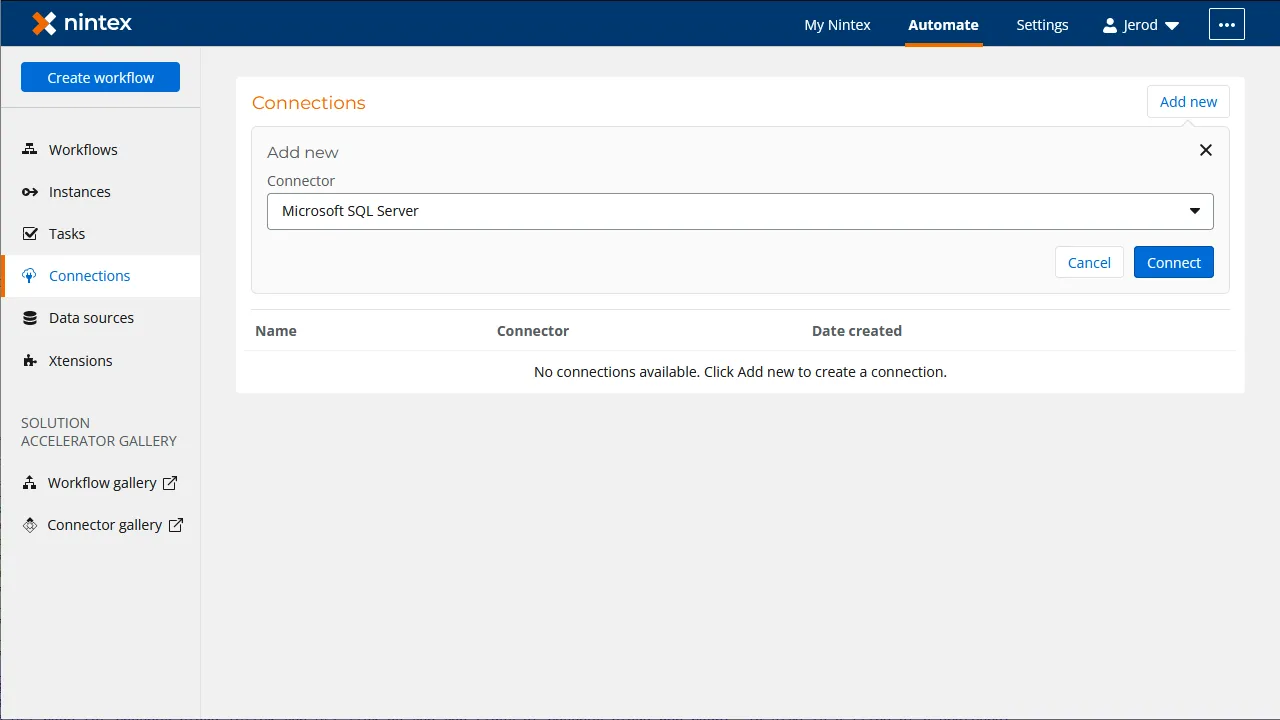
- In the SQL Server connection wizard, set the following properties:
- Connection Name: Connect AI
- Username: a Connect AI username (e.g. [email protected])
- Password: the Connect AI user's PAT
- Database Host: tds.cdata.com:14333
- Database Name: the NetSuite SuiteAnalytics connection (a.g., SuiteAnalytics1)
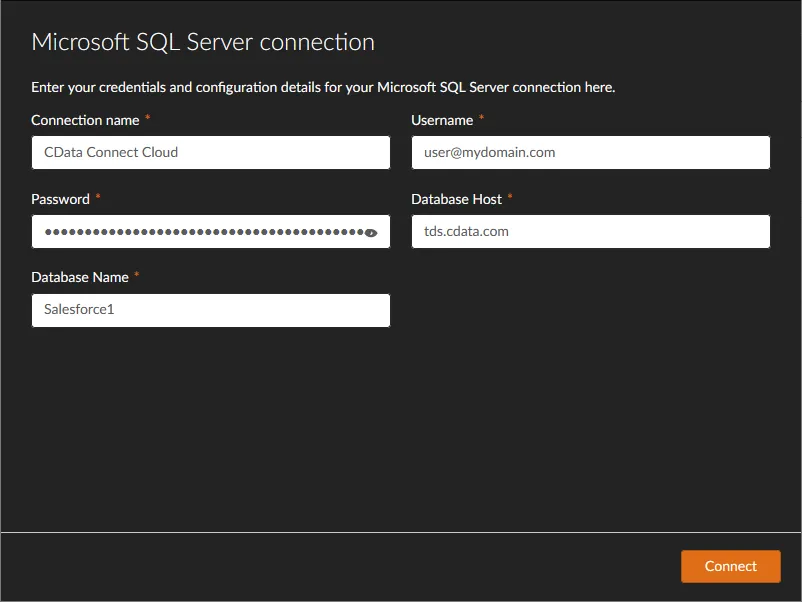
- Click "Connect"
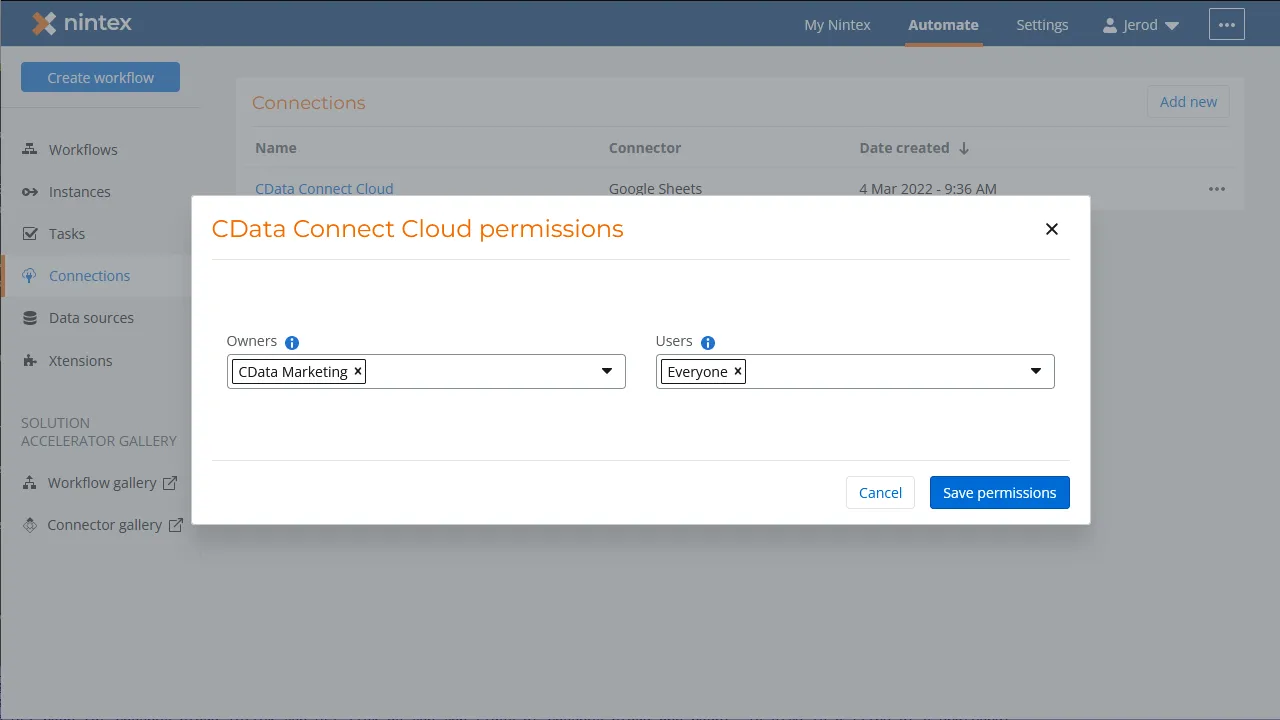
- Configure the connection permissions and click "Save permissions"
Create a Simple NetSuite SuiteAnalytics Workflow
With the connection to CData Connect AI configured, we are ready to build a simple workflow to access NetSuite SuiteAnalytics data. Start by clicking the "Create workflow" button.
Configure the Start Event Action
- Click the start event task and select the "Form" event
- Click "Design form"
- Drag a "Text - Long" element onto the Form and click the element to configure it
- Set "Title" to "Enter SQL query"
- Set "Required" to true
- Drag a "Text - Short" element onto the Form and click the element to configure it
- Set "Title" to "Enter desired result column"
- Set "Required" to true
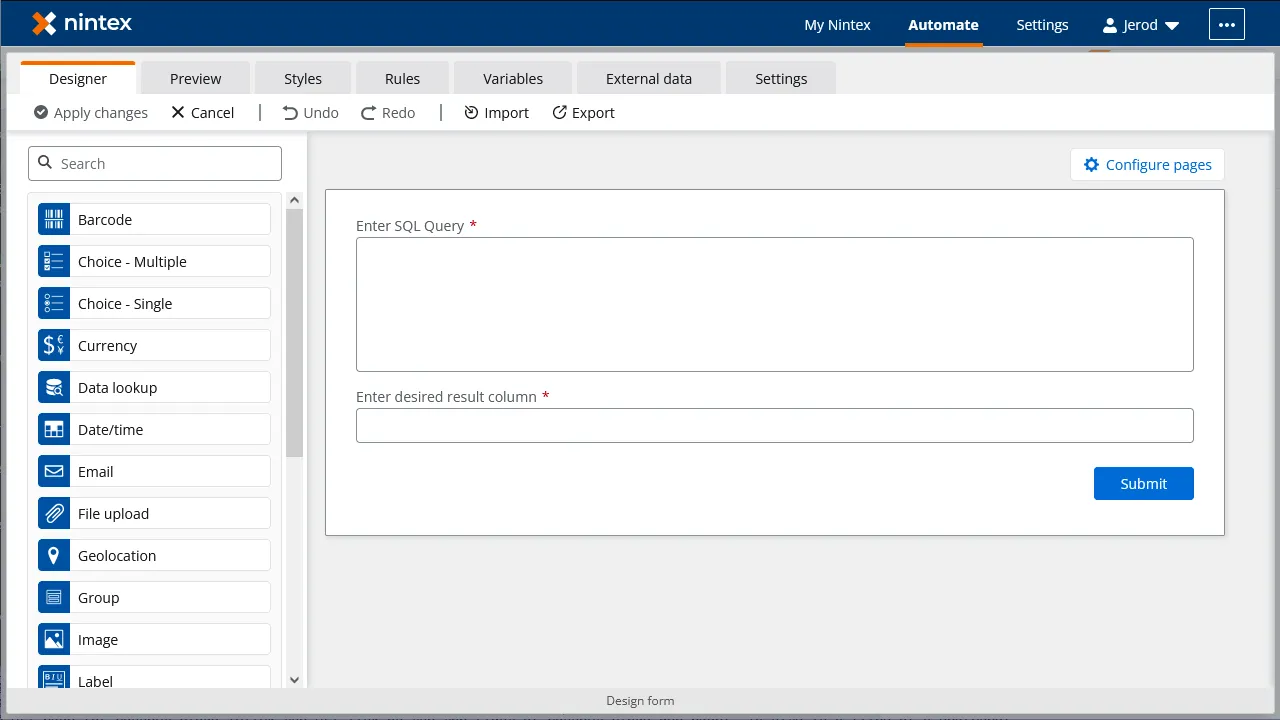
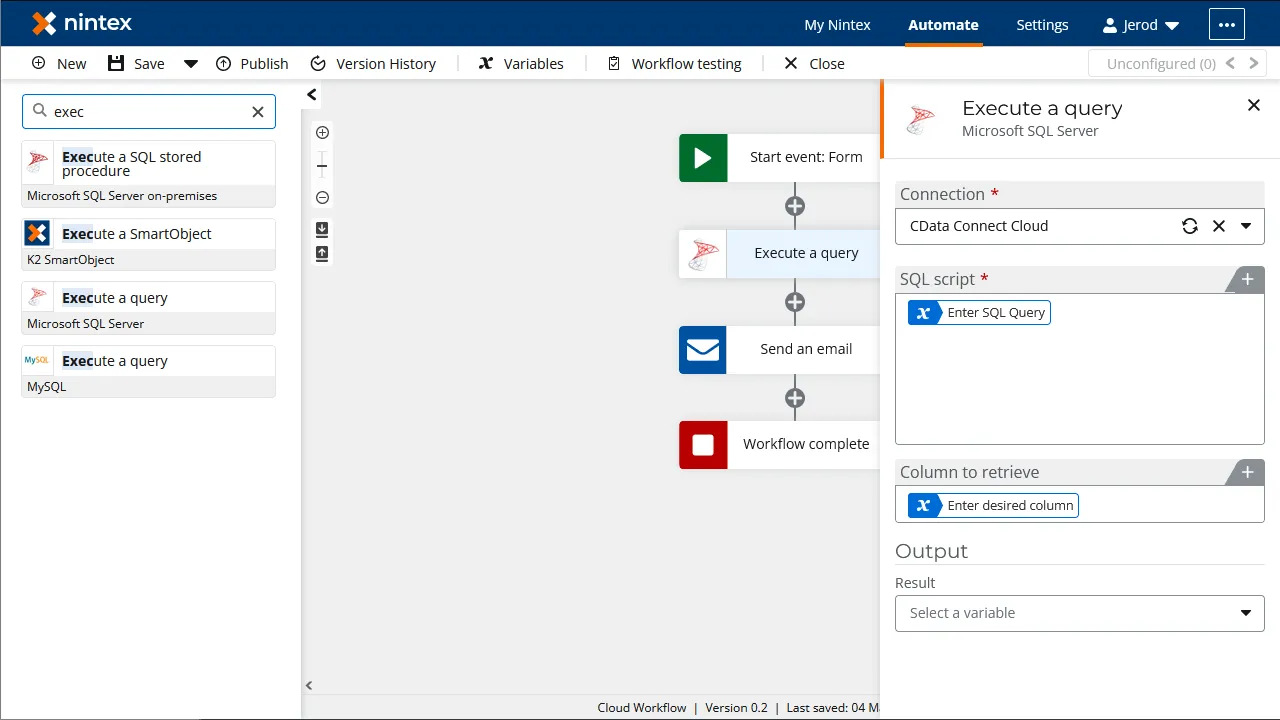
Configure an "Execute a Query" Action
- Add an "Execute a query" action after the "Start event: Form" action and click to configure the action
- Set "SQL Script" to the "Enter SQL Query" variable from the "Start event" action
- Set "Column to retrieve" to the "Enter desired result column" variable from the "Start event" action
- Set "Retrieved column" to a new variable (a.g., "values")
Configure a "Send an Email" Action
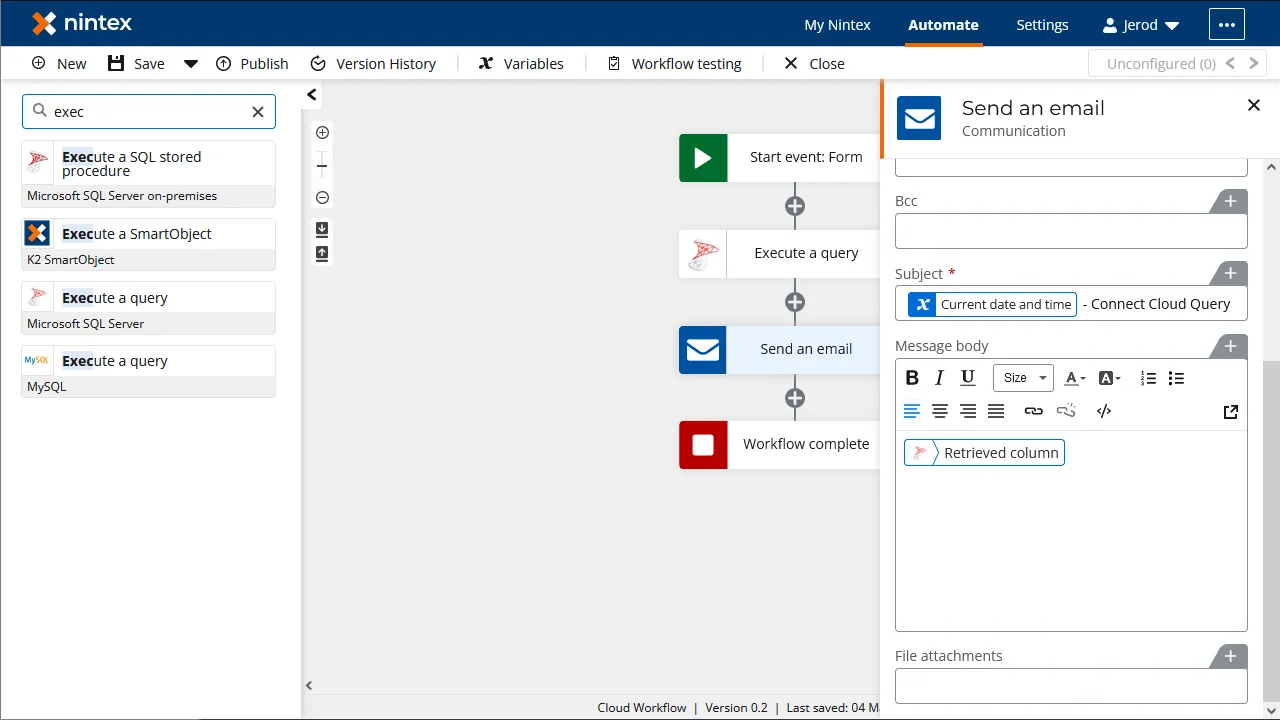
- Add a "Send an email" action after the "Execute a query" action and click to configure the action
- Set the "Recipient email address"
- Set the "Subject"
- Set the "Message body" to the variable created for the retrieved column
Once you configure the actions, click "Save," name the Workflow, and click "Save" again. You now have a simple workflow that will query NetSuite SuiteAnalytics using SQL and sand an email with the results.
To learn more about live data access to hundreds of SaaS, Big Data, and NoSQL sources directly from your cloud applications, check out the CData Connect AI page. Sign up for a free trial and reach out to our Support Team if you have any questions.